











University of Guelph’s New Honey Bee Research Centre is reimagining the future of food with honey bees.
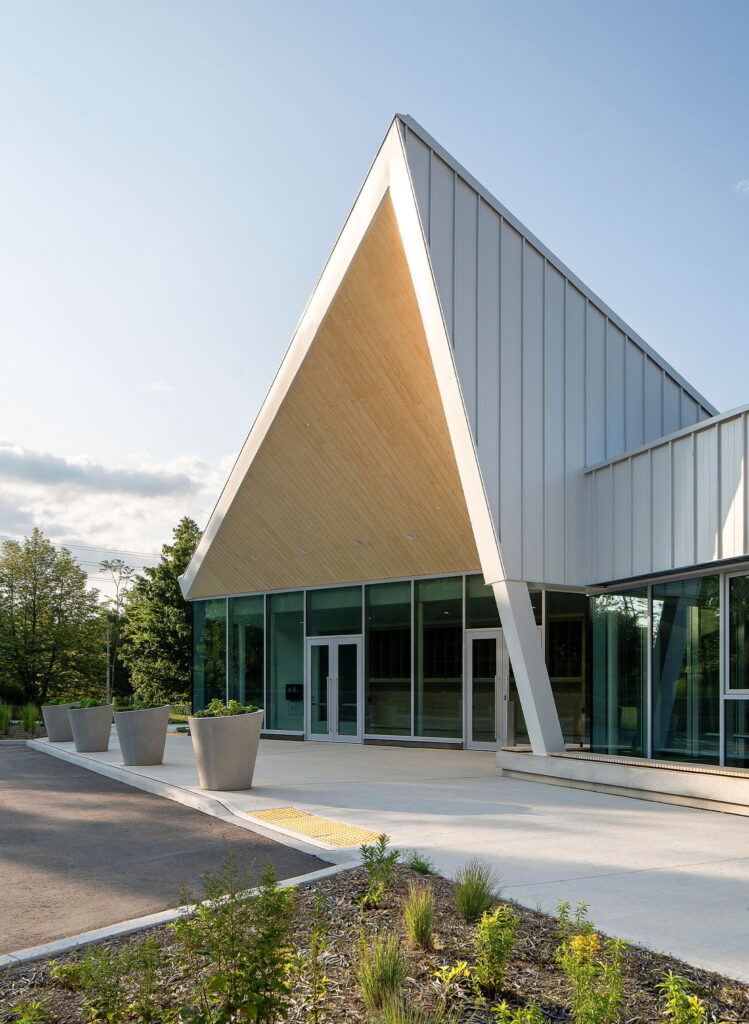
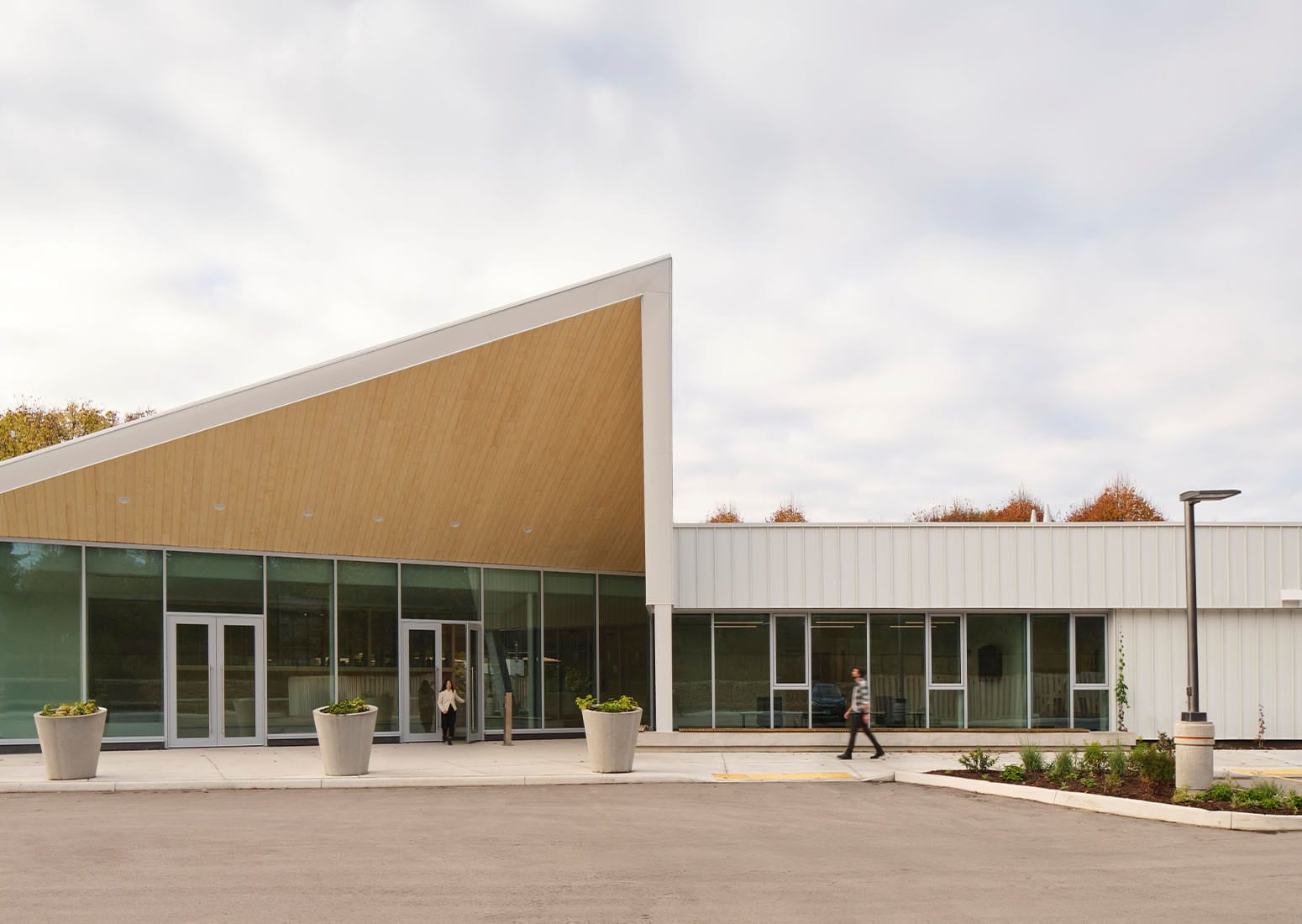
At first glance, the new Luckevich Pinchin Honey Bee Research Centre (HBRC) at the University of Guelph may appear to be a study in contemporary architecture. Yet, beyond its folded metal exterior and light-filled interiors lies a much larger purpose: to better understand and protect one of nature’s smallest — and most consequential — contributors to our food system.
Completed in May of 2026, the 14,000-square-foot facility is a state-of- the-art centre dedicated to pollinator health, bringing scientific research, commercial honey production, education and public discovery all under one roof. Located in a remote area of the university’s grounds and beside the Guelph Arboretum, the centre reflects the University of Guelph’s long-standing commitment to agricultural research and the vital role honeybees play in Ontario’s food supply.
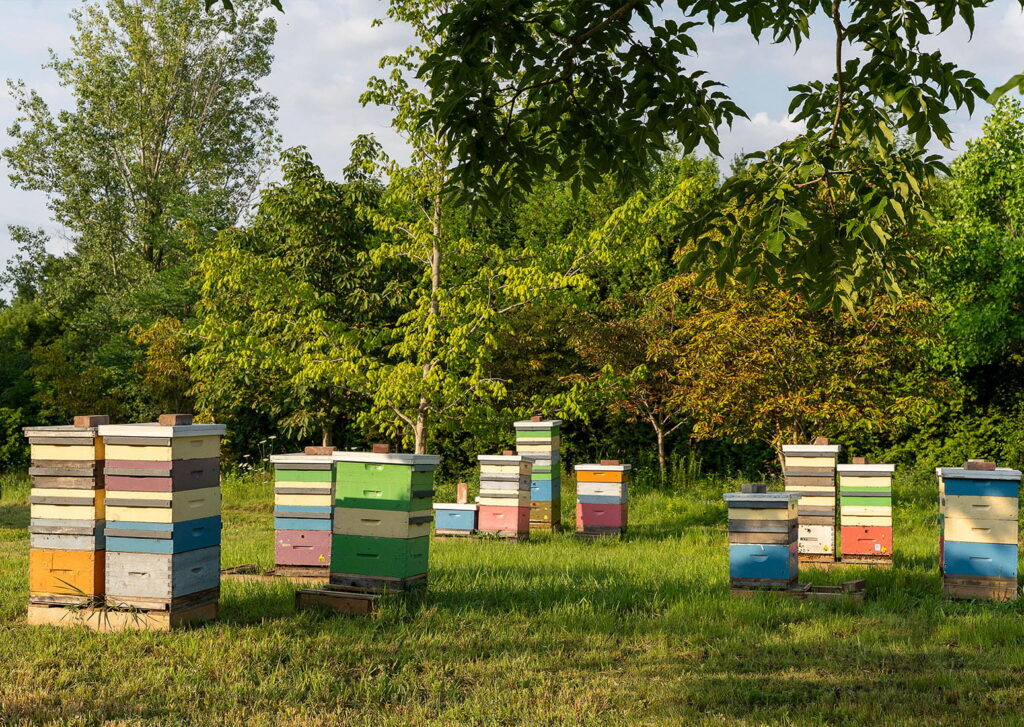
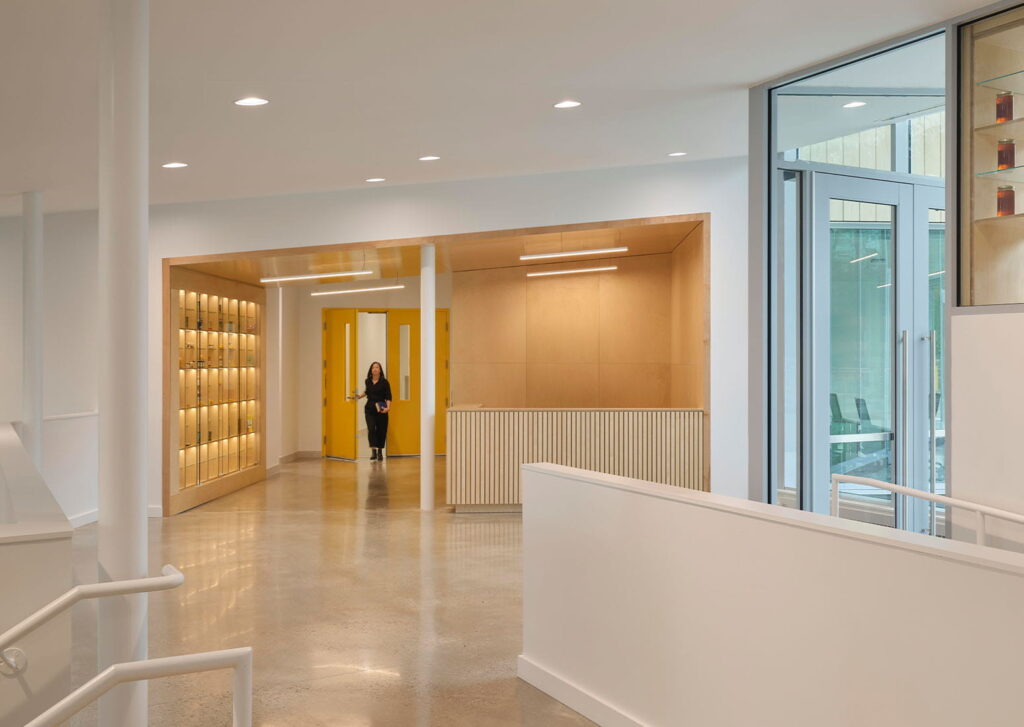
Conceived as a living laboratory, the building makes the relationship between beekeeping, science and food production visible. Its carefully considered layout creates seamless circulation between the apiary, laboratories and production spaces while allowing visitors to observe how honey is extracted and prepared for commercial use without entering controlled areas or disrupting operations. The design was shaped through close collaboration with researchers, administrative staff and commercial beekeepers, ensuring that the architecture responds to the practical realities of the work taking place inside.
At the heart of the public experience is the Discovery Centre, a flexible space designed for exhibitions, workshops, talks and educational programming. Its direct connection to a demonstration apiary allows children, students and scholars to encounter living bees firsthand, transforming lessons about pollination and food systems into tangible experiences. An accessible ramp follows the natural topography of the site, creating a gradual journey through the centre and its surrounding landscape. Nature is equally present in the building’s architectural language. A generous entrance canopy opens into a bright atrium filled with natural light, while pollinator-friendly plants line the entrance and front walkway. Along the north façade, a living wall and vine system will evolve over time. The site itself was approached with a light touch: formerly a tree nursery, it was carefully selected and developed to preserve significant trees and minimize excavation. Outdoor species were chosen with the surrounding urban forest in mind, creating a habitat that supports local wildlife. Even the building’s folded metal cladding echoes the vertical rhythm of the trees.
“The honeybees were our tiniest clients,” says Diarmuid Nash, partner at Moriyama Teshima Architects. “They taught us about food chains, pollination, the colours of honey, disease, surviving the winter, social structure, flight paths, hard work and the delicate balance upon which every ecosystem depends.”
That balance has implications far beyond the hive. With a significant proportion of crops dependent on pollination, the health of pollinators is inseparable from food security. The centre arrives at a critical moment, as climate change, habitat destruction, pollution and other environmental pressures continue to challenge bee populations. By bringing the science, infrastructure and labour behind beekeeping into public view, the HBRC offers an opportunity to build greater understanding of the systems that ultimately sustain communities.
For Canada’s apicultural industry, the facility also represents a significant investment in the future. Rod Scarlett, executive director of the Canadian Honey Council, describes it as a model for “progressive and innovative beekeeping activity” in Canada and around the world.
More than a research facility, the Honey Bee Research Centre is a place where science, architecture, agriculture and public education converge. Its smallest inhabitants may be the inspiration, but its ambition is decidedly larger: to help create a more informed, sustainable and resilient food system — one bee at a time.