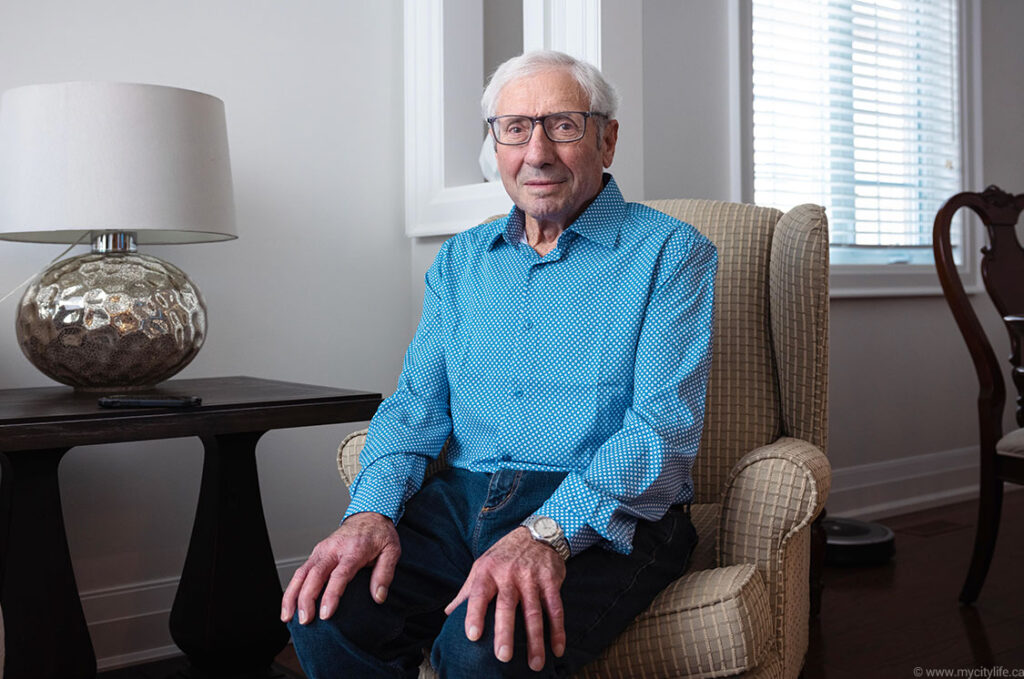










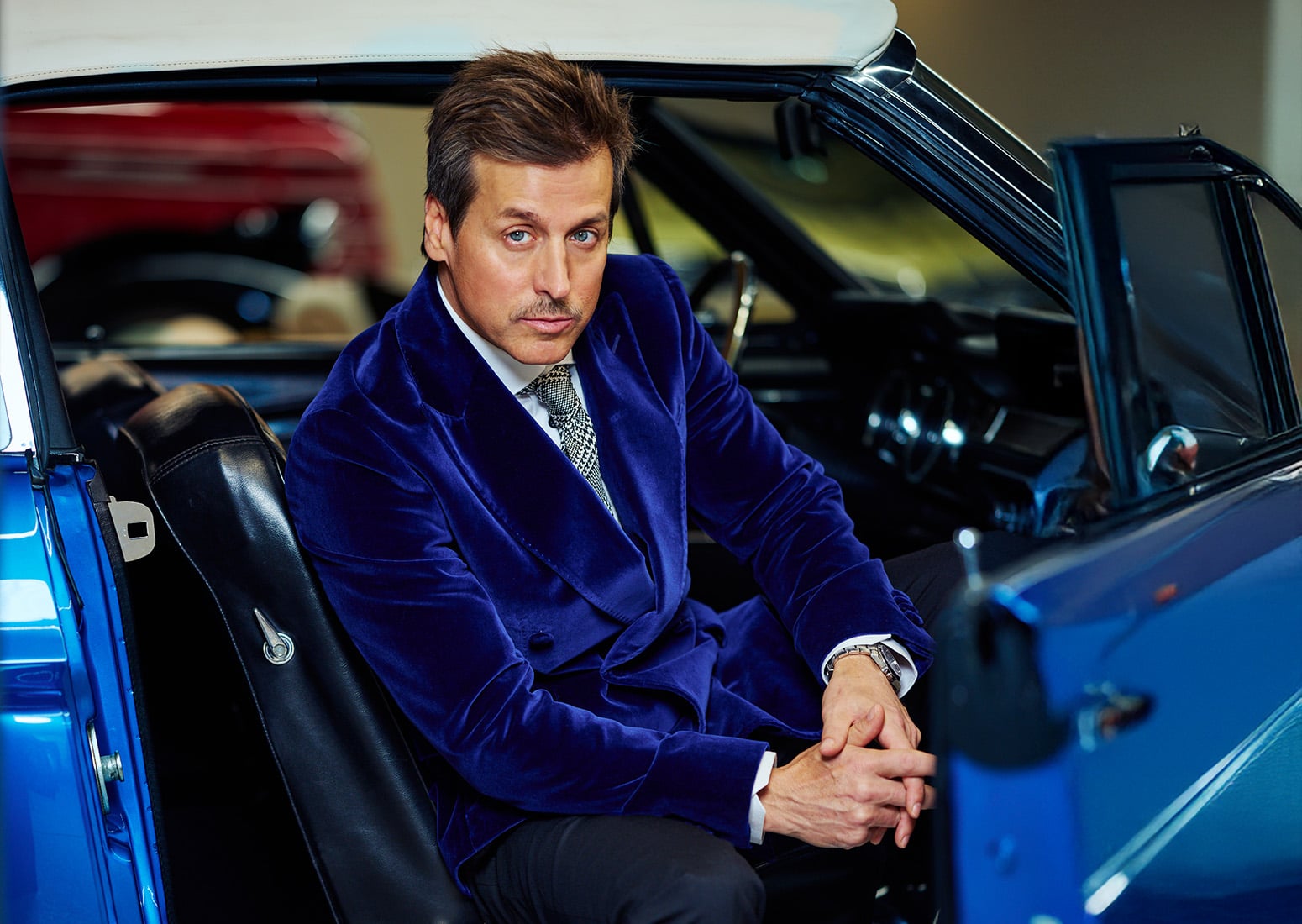


Thirty years after Our Lady Peace first turned the volume up, Raine Maida is still making noise, but these days, his most compelling work may be happening in the quieter places: marriage, fatherhood, service and simply by showing up when it matters most.
It is tempting to describe Raine Maida simply as a rock star, mostly because he is one. But three decades after Our Lady Peace became one of Canada’s defining bands, the designation feels strangely incomplete. Maida has accumulated the résumé of someone who should be looking backwards: millions of records sold, arenas filled, awards collected, songs that have outlived the CD players they were first played on. Our Lady Peace has spent the past year celebrating 30 years of releasing music, with the OLP30 tour and a live album capturing the kind of career longevity most bands never get close to touching.
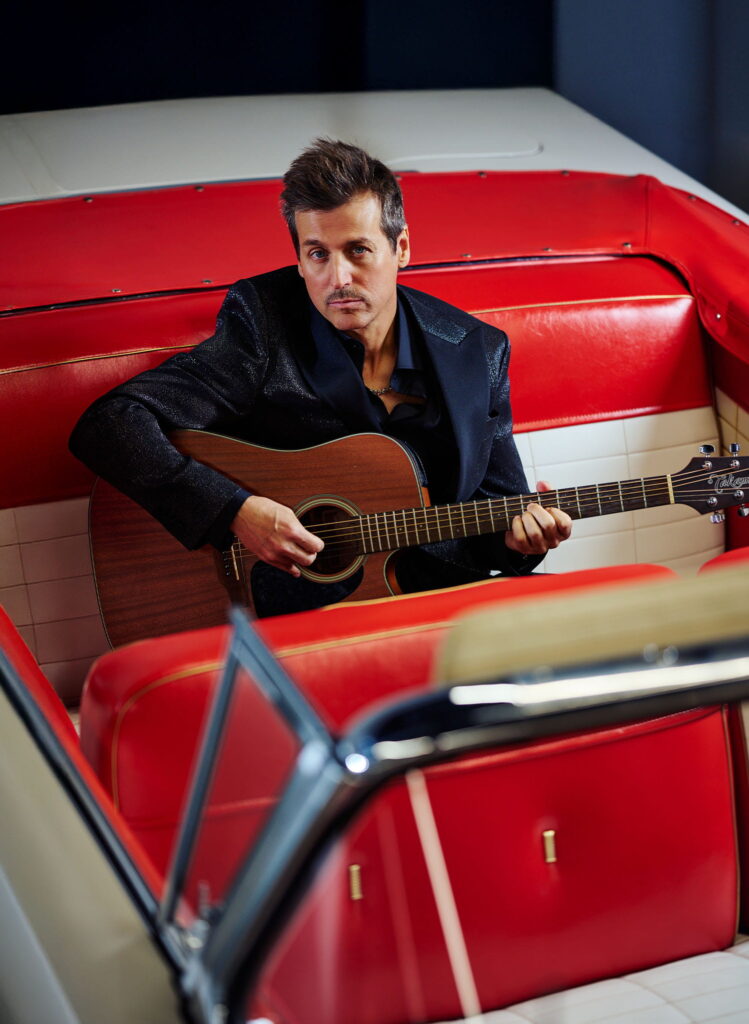
Nostalgia would be the obvious move, but Maida seems more interested in what still requires work. At 56, his life has become less about arrival than maintenance. Maintaining curiosity. Maintaining a marriage. Maintaining the ability to be surprised by his children, by music, by the world outside his own experience. Even his definition of fatherhood has been stripped of anything grand. “I just want my kids to know that I showed up,” he says. “It sounds stupid and simple. But showing up as a father is the most basic but courageous thing you can do.”
There it is. Not the sold-out stadiums. Not the platinum records. Not even the songs. Showing up. The idea feels almost aggressively ordinary for someone whose adult life has unfolded under stage lights, yet it threads through nearly every part of Maida’s story now.
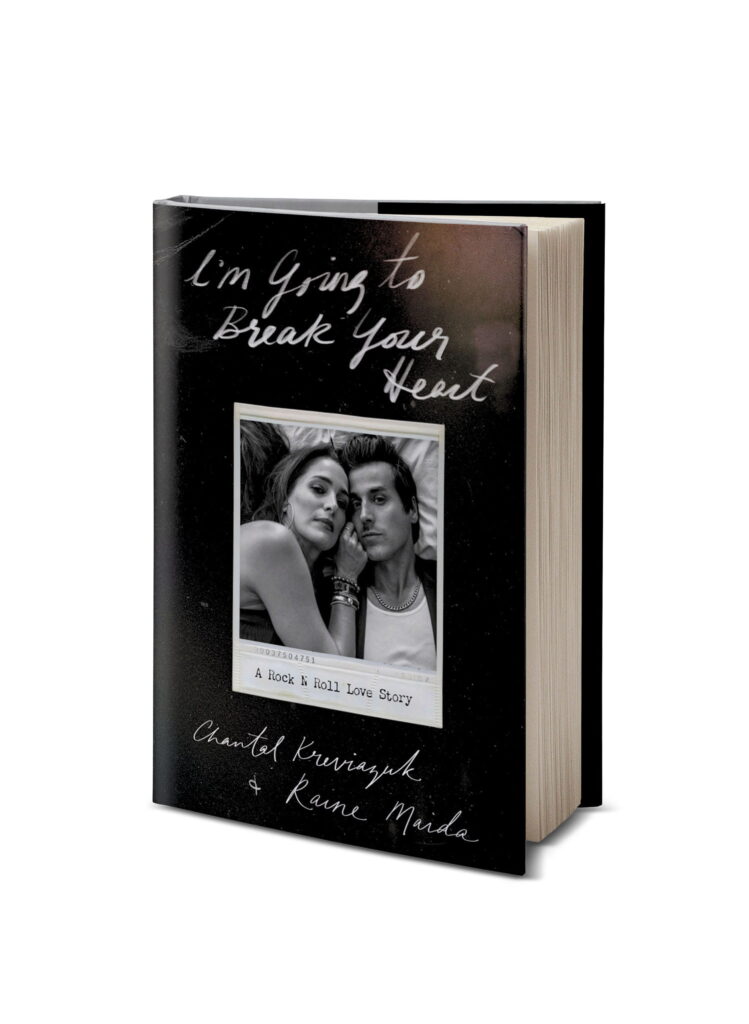
This summer, he and his wife, singer- songwriter Chantal Kreviazuk, released I’m Going to Break Your Heart: A Rock N Roll Love Story, a joint memoir about their marriage. It would have been easy, and infinitely safer, to write the glossy version: two celebrated Canadian musicians meet, fall madly in love, build successful careers, raise three sons and somehow make it all work. That is not the book they wrote. Instead, they go directly to the less flattering material: the point at which their relationship began to unravel, the unhealthy patterns they developed, therapy, conflict and the decision to attempt repair rather than quietly preserve the public image of a happy marriage.
For a couple who could reasonably be labelled Canadian music royalty, there is something almost subversive about refusing to behave like it. The book’s central question is not whether two people love each other, it is whether love is enough when two people have accumulated years of history, damage, expectation and competing identities. Maida has a wonderfully unromantic way of describing the work. “You have to be creative to keep a relationship going,” he has said. “And you have to be creative as a family to raise kids.” Anyone expecting a rock star’s manifesto on passion may be disappointed to discover that his philosophy increasingly sounds like something closer to “pay attention.”
Admittedly, the beginning of their story together had considerably more cinematic flair. Maida met Kreviazuk at a Pearl Jam concert while Our Lady Peace was recording “Clumsy.” “I fell in love with her right there, that instant,” he recalls. They talked through the show. He barely remembers what Pearl Jam played.
It is an excellent origin story — almost suspiciously excellent — but nearly 30 years later, the interesting part is no longer that two musicians fell in love at a concert. Plenty of relationships begin beautifully. Far fewer remain interesting after decades of laundry, parenting, careers, resentment, compromises, therapy and the thousand tiny negotiations that never appear in a love song. The love story was never really the concert. It was what happened once they got home.
That understanding of longevity seems to mirror Maida’s relationship with music itself. Before it became a career, music was a refuge. Maida has recalled how he felt unhappy and isolated as a boy away at boarding school, how he’d stay awake at night listening to records and disappearing into the world inside them. “Music was kind of like my religion,” he says. “It saved me.” There is a lovely symmetry to that now — long before strangers were finding themselves in his lyrics, Maida was that kid, searching somebody else’s songs for evidence that he was not alone. Then Our Lady Peace happened.
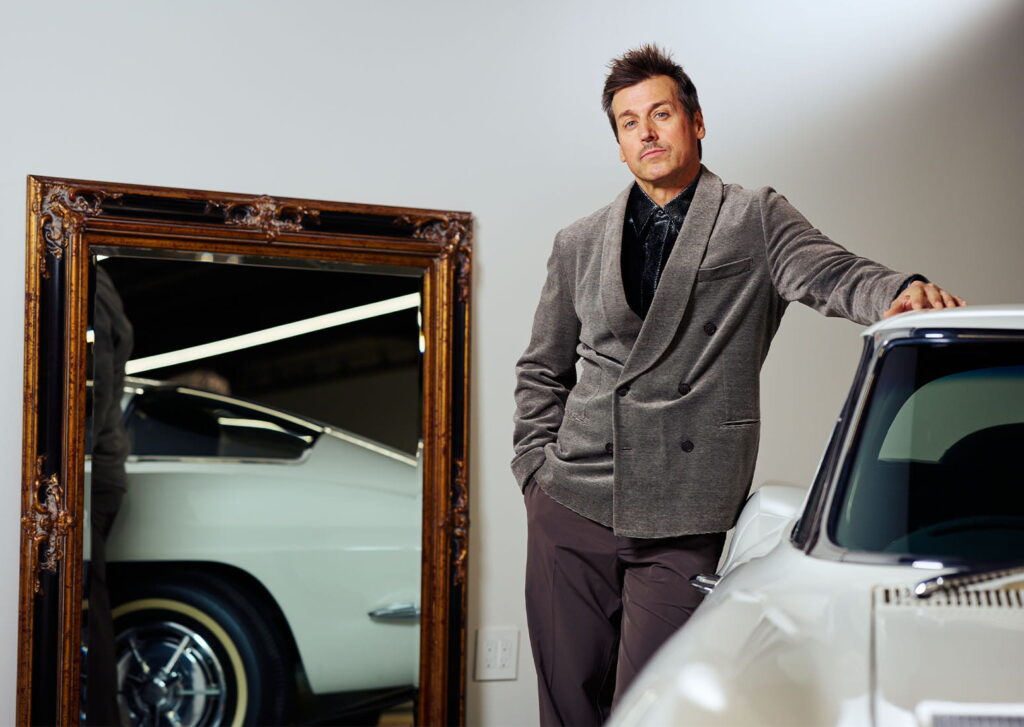
When the band arrived, it soon became part of the 1990s soundtrack of Canadian alternative rock, with songs that included “Clumsy,” “Superman’s Dead,” “In Repair” and “Somewhere Out There.” Thirty years later, those songs still draw crowds large enough to turn nostalgia into a commercial strategy all its own. But Maida does not speak about performing them as though he is trapped inside his own greatest hits. “I go on stage every night now with gratitude,” he says. Gratitude is not exactly the sexiest word in rock and roll. That may be why it works.
Musicians who remain permanently suspended at the age they became famous is a time- honoured stereotype. Maida has achieved the opposite. His life has expanded, and his understanding of music has expanded with it. Fatherhood changed the audience he’d imagined when he first wrote. “I realized that my kids are going to judge me by my music more than me giving them speeches or advice at the kitchen table,” he says. “So, all of a sudden, the music I was making was for them specifically.”
It is an unusual legacy to contemplate. Most parents leave behind photographs, stories, the occasional piece of ugly furniture that nobody dares to throw away. Maida’s sons will inherit a music catalogue. They have also changed the way he thinks about creativity. He’s said that an adult looks outside and might notice the garbage, the lawn and whatever the dog has done to the driveway, but a child will walk outside, look at a cloud and see a dinosaur. “The trick,” Maida adds, “is trying to hold onto that child’s innate creative, aspirational way of walking into each day.”
That sentence may contain more useful creative advice than half the books written about creativity. It also explains something about the restlessness running through Maida’s career. He has never confined himself neatly to the role of frontman. He has written, produced, experimented with technology and remained engaged in humanitarian work, particularly with War Child Canada.
For more than two decades, he and Kreviazuk have supported the organization’s work with children and families affected by conflict, and Maida has travelled on behalf of the organization to war-torn regions including Afghanistan and Iraq. In 2025, War Child honoured him with its Founder’s Award. His response was characteristic: “War Child has done more for me than I’ve done for them.”
That might sound like the standard humility expected at an awards ceremony, except that Maida’s stories reveal how deeply those experiences disrupted his own sense of separation. He describes how, during a visit outside Kabul, he spent time with young Afghan students studying computer science. He noticed their interests, their clothes, their creativity, and learned that one young man had even won a design competition working from his bedroom. Maida looked at him and had a sudden thought: “That could be my son.” Four words, and suddenly geopolitics became personal.
These days, that might be Maida’s most consistent impulse: to collapse the distance between things we prefer to keep separate. The rock star and the father. The successful marriage and the struggling one. His own children and somebody else’s. The person onstage and the person standing in the kitchen trying to figure out how to stay connected to his family.
Even his recent travels seem to have pulled him in the direction opposite to that of celebrity. In Calabria, he visited the place where his father was born, spent time with relatives he barely knew and visited his grandmother’s grave. What he took from the trip was not an appetite for more, but for less. “In the midst of all the noise and everything going on, trying to find that sweet simplicity is a huge goal for me.”
“I Realized That My Kids Are Going to Judge Me by My Music More Than Me Giving Them Speeches or Advice at the Kitchen Table.”
Sweet simplicity is a funny ambition for a man who has spent most of his life around amplifiers. But perhaps simplicity only becomes interesting once you have lived through enough complexity. Maida seems to understand that the moments we romanticize are frequently the easiest ones. Falling in love can happen in the space of a Pearl Jam concert; staying married requires thousands of days that nobody would put in a movie. Starting a band requires ambition; keeping a band alive for 30 years requires adaptation. Becoming a father takes a moment; being a father requires repetition. Even compassion is easy when it remains abstract. It becomes much more demanding when you look at a stranger’s child and recognize your own.
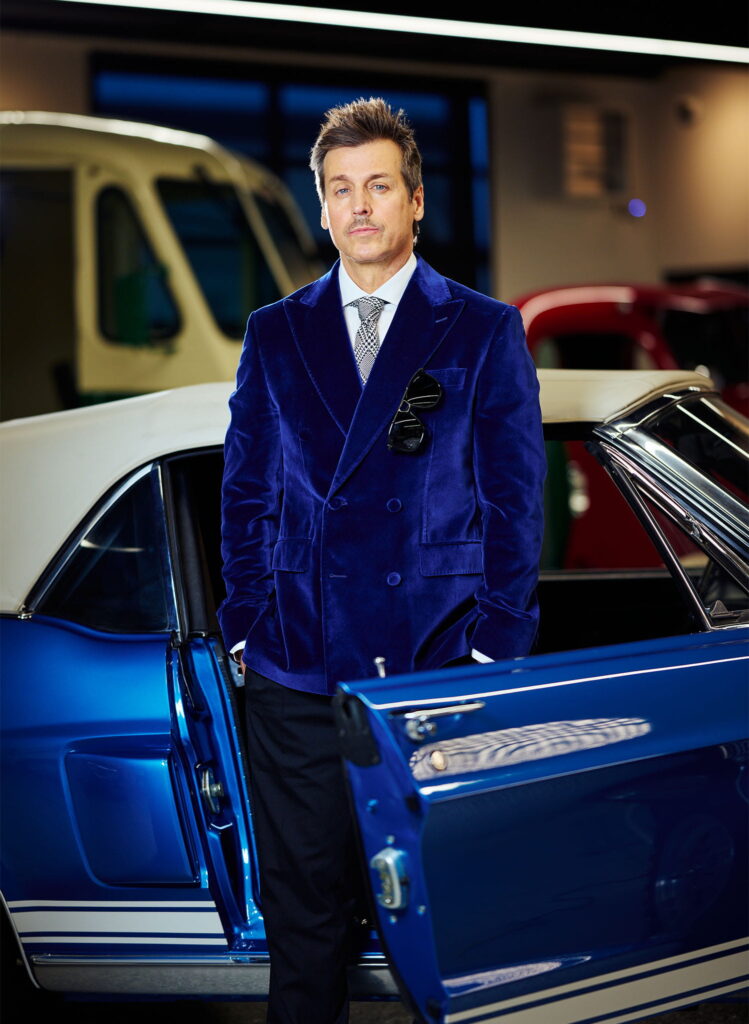
There is a temptation when writing about someone with a career like Maida’s to search for the dramatic reinvention, the new era, the comeback, the legacy. But that might be the wrong story. The most interesting thing about Raine Maida in 2026 might be that he no longer appears particularly interested in pretending life can be divided into neat eras at all. The musician informs the father. The father informs the humanitarian. The husband informs the songwriter. The failures inform the marriage.
The boy who needed music to save him still exists somewhere inside the 56-year-old walking onto stages with gratitude. Nothing is discarded. It is integrated. And that may be what “staying” actually means. Not remaining exactly where you are, but remaining willing to change while you are there. After more than 30 years, Our Lady Peace can still fill a room. Maida can still summon that unmistakable voice and send it toward thousands of people who know the next line before he sings it. But the volume is no longer the most compelling part.
The more interesting story is quieter: a man continuing to choose his marriage, a father wondering what his sons will remember, an artist protecting his capacity for wonder, a humanitarian refusing to see another person’s child as somebody else’s problem. A rock star, in other words, who has discovered that longevity has very little to do with simply lasting. It is about remaining awake enough to care and then, tomorrow, showing up again.

Q&A with Raine
Q: What makes you excited about the Break Your Heart tour?
A: We’ve never done a full national tour on a bus with a band, lighting and the ability to play for two hours. Having the book out will also play into how we approach songs and talk to each other between songs. It’s not just a concert. It will be a true holistic experience.
Q: How was writing I’m Going to Break Your Heart different from songwriting?
A: This book allowed me to colour outside the lines. Songwriting is a challenge as far as having to condense thoughts into few words, express emotions in short stanzas. This memoir allowed me to reflect on past experiences in depth. I never felt restrained or had to conform to a three- or four-minute style. I felt the ability to be more personal with the descriptive freedom a book allows.
Q: What’s your favourite thing about creating music?
A: Songwriting allows me to tell stories that I might not ever tell. It’s an expression that I cherish for its ability to be both personal and abstract at the same time. I learn about myself from songwriting and it’s the purest art form I’m able to do. I’m not sure where I’d be without it. The creative release of writing songs saves me. I might have self-combusted without it.
Q: Did you learn anything new about your wife while writing the memoir?
A: Of course I did — but probably not as much as some might believe. I’ve been with Chantal longer than I haven’t. There’s not much that could truly surprise me. I did learn that she’s a great writer. She has such a unique style — she puts it all out there, no different than the way she lives her life. Heart on her sleeve. Empath-like.
Q: How have you balanced career pressures and marriage over the past decades?
A: I’m not sure we have. Of course we try to be more intentional with making time for each other, but the truth is it’s chaos lots of the time — but maybe that’s the beauty of it. The art is in the counterbalance. It keeps it exciting. It’s definitely kept us creative. It might be boring otherwise!
Q: Our Lady Peace has been one of the most beloved rock bands in Canada. Do you reminisce about your journey, and do you have a message for your ardent Canadian fans?
A: I stand on stage every night with extreme gratitude for OLP and for our fans. Being able to continue nurturing that deep connection is profound. Where I used to be blinded by what was next and rarely satisfied, I’m now able to be in the moment in the studio or onstage. Raising a family taught me that. I cherish the small victories now. Every song I’ve written or write, each performance, whether in an arena or a small bar, is evidence of life.